 Skip to content
In Worcester, with Dr. Heinis or Lawrence
Meet Dr. Chris Heinis or Lawrence at 292 Lincoln Street, where every transplant is done.

An earlier strip surgery leaves a scar across the back of your head, and short hair can reveal it. We hide it with your own hair, moved into the scar one follicle at a time by FUE, or with scalp micropigmentation matched to your hair and skin.
FUE repairs are done in Worcester, where every transplant is done. Consultations in Worcester, Lexington (near Boston), Bedford and Warwick, or by video if you can't make it in.
Dr. Chris Heinis has repaired donor scars for years, many of them left by other practices. 15,000+ hair transplants since 1993.
Strip surgery (FUT) takes the grafts from a strip at the back of the head and leaves a thin scar where it was closed. With some length, the hair above covers it. Cut very short, or once the scar has widened, it can be seen. The repair depends on the scar.
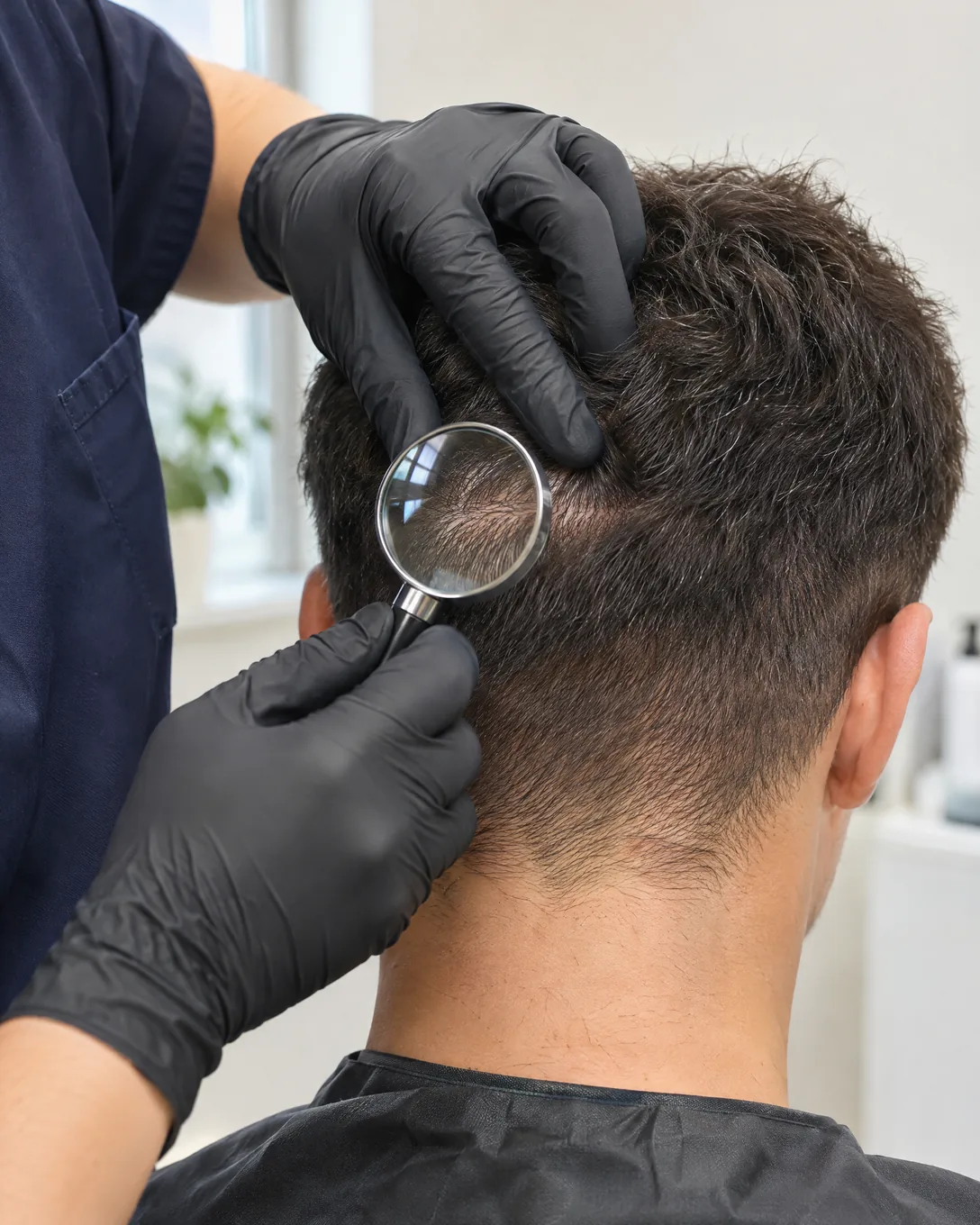
The back of the head, three times, drawn hair by hair: follicles are taken one at a time from the hair around the scar and placed into it, where they grow like the hair beside them.
Done at 292 Lincoln Street, Worcester, where every transplant is done. Dr. Chris Heinis oversees every procedure and makes every incision himself.
At your consultation we look at the scar, the hair around it and how short you like to wear it, then recommend the repair that fits.
Follicles are taken one at a time from the hair around the scar, by FUE, so there's no new linear scar.
Each one goes directly into the scar and around it, so hair grows where the scar was.
Most people are back to normal in 3 to 5 days. The moved hair starts to grow from 3 to 4 months; full results take 12 to 18.
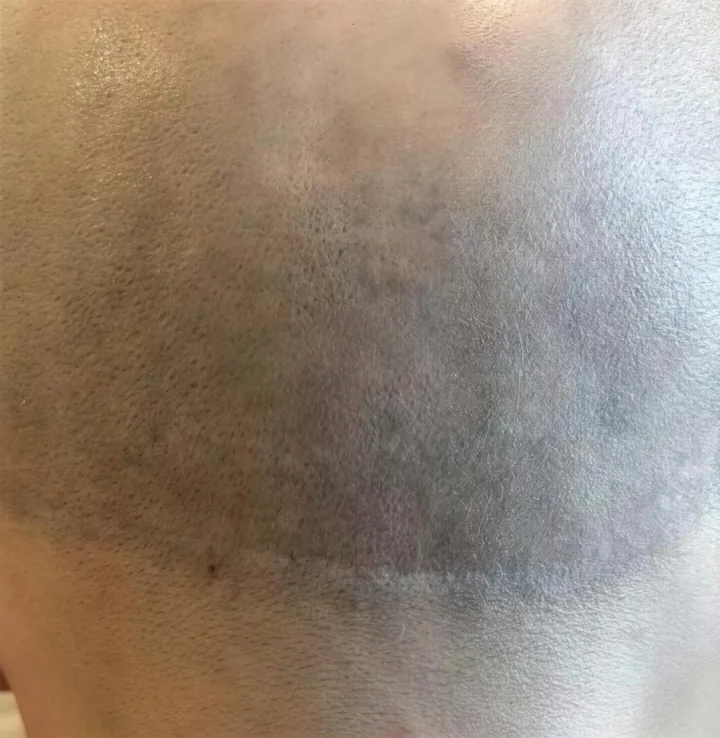
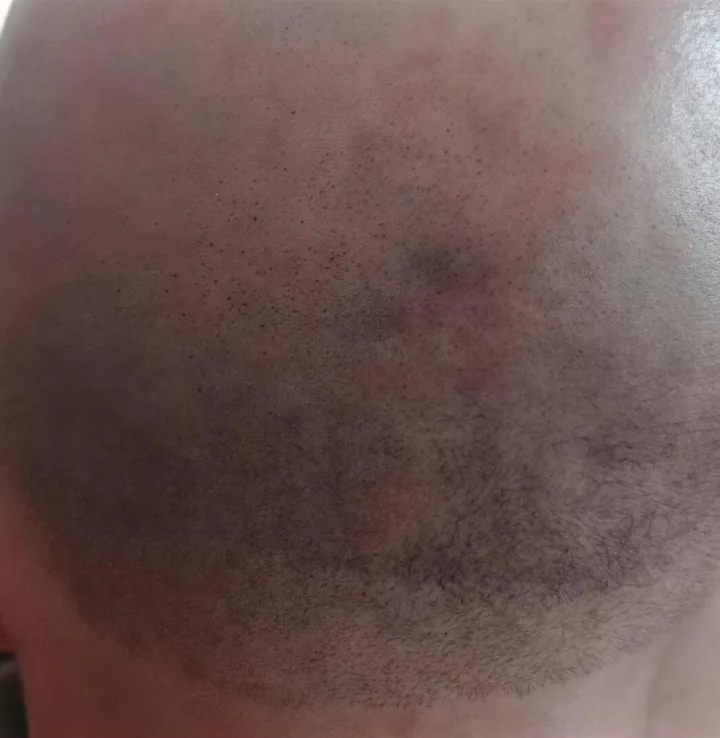
Scalp micropigmentation camouflages the scar with tiny dots of pigment, matched to your hair color and skin tone. It adds no hair; it hides the scar. It's done in house by our pigmentologist, with virtually no downtime, for anyone who would rather not have the scar removed by surgery. The photos are one of our patients, before SMP over his scar and after.
Verified five-star reviews from real DiStefano hair restoration patients across New England.
Strip surgery (FUT) takes the grafts from a strip at the back of your head and leaves a thin scar where it was closed. With some length, the hair above covers it. Cut very short, or once the scar has widened, it can be seen.
Yes. Dr. Chris Heinis has repaired donor scars for years, many of them for patients who had their first surgery at another practice.
The aim is to make it hard to see. We work to minimize how much the scar shows and make it difficult to detect. Results vary from patient to patient.
Follicles are taken one at a time from the hair around the scar and placed directly into it and around it, so hair grows where the scar was. Read more about FUE.
Not a linear one. FUE takes follicles one at a time, leaving tiny dots that the hair around them hides.
Yes. Scalp micropigmentation camouflages the scar with tiny dots of pigment matched to your hair color and skin tone. It isn't surgery, and there's virtually no downtime.
An extremely wide scar can be cut out and the area closed again. Your consultation covers whether that, FUE or SMP fits your scar.
As after any FUE: transplanted hair starts to grow from 3 to 4 months, with full results at 12 to 18 months. Most people are back to normal in 3 to 5 days.
It depends on the scar and the repair. You get an exact figure at your consultation, and financing through Cherry is available.
FUE repairs are done at 292 Lincoln Street, Worcester, where every transplant is done. Check-ups afterwards can be at our Worcester, Lexington, Bedford or Warwick offices.
No. There is no obligation, in person in Worcester, Lexington, Bedford or Warwick, or by video.
Pick the one that suits you, then fill out the form below, book online or call (508) 756-4247.
Meet Dr. Chris Heinis or Lawrence at 292 Lincoln Street, where every transplant is done.
Meet Lawrence, our senior consultant of more than 15 years, on his days at those offices.
If you can't make it to an office, meet Lawrence by video, from your phone or computer. Video can't be booked online: send the form below and say you'd like video, or call (508) 756-4247. Patients near Rocky Hill, CT start here.